Vitra vs alugha
Vitra and alugha both localize content for global audiences, but their scope differs. Vitra translates text, images and video into many languages with a focus on fast multilingual output. alugha is a video-specific platform with dubbing, subtitles and a broader localization workflow for media. Choose Vitra for broad, fast multilingual translation across content types. Choose alugha when you need a dedicated video-localization pipeline with dubbing and managed workflows.
Vitra
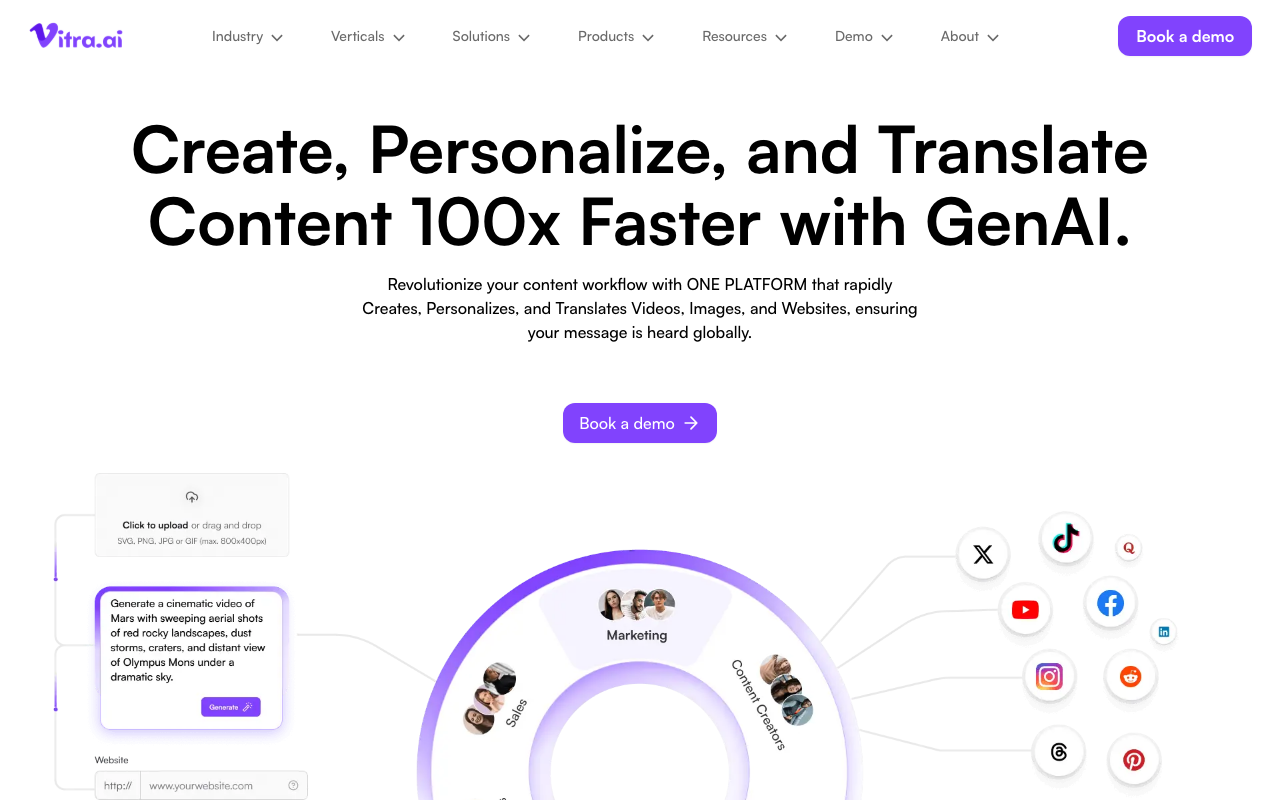
Vitra is an AI translation and localization tool that translates video, audio, images and text into a wide range of languages. It targets content teams that want to take one piece of content and republish it in multiple languages without a full manual localization team.
alugha
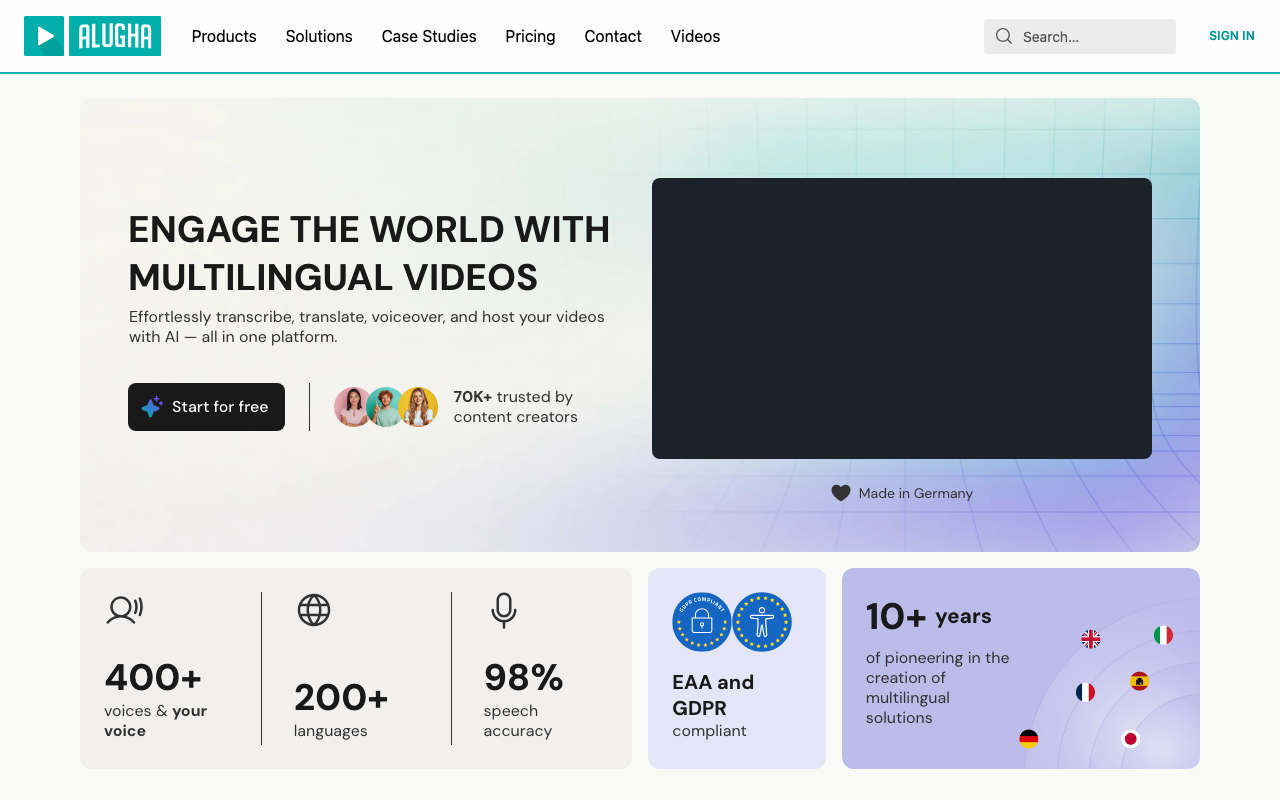
Alugha is a powerful multilingual video toolkit that enables you to create, publish, and host videos in multiple languages, making it easy to reach a global audience. With Alugha, anyone can produce high-quality multilingual videos efficiently and at scale, making it an essential tool for businesses and content creators looking to expand their reach.
Editorial verdict
Vitra and alugha both localize content for global audiences, but their scope differs. Vitra translates text, images and video into many languages with a focus on fast multilingual output. alugha is a video-specific platform with dubbing, subtitles and a broader localization workflow for media. Choose Vitra for broad, fast multilingual translation across content types. Choose alugha when you need a dedicated video-localization pipeline with dubbing and managed workflows.
| Aspect | First tool | Second tool |
|---|---|---|
| Core focus | Multilingual translation of content | Video localization and dubbing |
| Best for | Text, image, video translation | Video-specific localization |
| Video depth | Translation and subtitles | Dubbing and managed video workflows |
| Breadth | Many content types | Strong in video |
| Strength | Fast multilingual output | Video localization depth |
When to choose Vitra
- • You translate several content types.
- • You want fast output into many languages.
- • You localize marketing assets and text.
- • You need a broad multilingual workflow.
When to choose alugha
- • You localize video specifically.
- • You need dubbing and subtitle workflows.
- • You manage media localization at scale.
- • You want strong video-specific tooling.
FAQ
Can both handle video translation?
Yes, but alugha is more video-specific while Vitra covers broader content types.
Is AI translation enough for final content?
No. Native review is recommended for consumer-facing localization in both tools.
Which scales for a large video catalog?
For a dedicated media pipeline, alugha leans stronger; confirm your volume with each vendor.
Sources and freshness
Updated 2026-08-18. Check current pricing, limits, and terms on the first official site and second official site.
Key differences at a glance
- Vitra leans toward Translation, while alugha focuses on AI-Video-Tools.
Need help deciding?
Use the guided finder to get a short list tailored to your stack.
Start guided matchVitra review notes
Full review →- • One piece of content can reach many language markets.
- • Covers text, image and video
- • style input in a single workflow.
- • AI translation can miss cultural nuance and idiomatic meaning.
- • Quality varies by language pair and content type.
- • Subtitles and translations always benefit from a native review.
alugha review notes
Full review →No review highlights yet.
No trade-off notes yet.